I once dragged a 23kg suitcase through three train stations in Italy, only to wear the same four outfits the entire fortnight. My back ached, my shoulders had grooves, and half the bag never left the hotel room. That trip taught me something simple: knowing what to pack for a two week trip isn’t about fitting more in. It’s about choosing less, with better reasons.
Since then I’ve refined a system that works whether you’re heading to a rainy city in November or a beach in July. It’s built around five questions: what will I actually wear, what do I need to stay clean and healthy, what tech and paperwork gets me through borders, what does this specific destination demand, and what do I check before the door closes. Get those right and you can pack for fourteen days in a carry-on without feeling deprived.
The Core Clothing Formula
Most people overpack clothes and underpack everything else. The fix is to stop thinking in outfits and start thinking in layers and washes. For two weeks, aim for roughly seven to ten days of clothing, then plan to do one load of laundry halfway through. That single decision cuts your bag weight by nearly half.
Here’s the math I use. Count your days, divide by two, and add one spare. For a fourteen-day trip that’s eight days of core items. Build it from these categories:
Five to six tops that mix and match — plain tees, one or two button-downs, a light sweater. Three to four bottoms — two pairs of trousers or jeans and one skirt or shorts depending on climate. One dress or smart outfit if you have a dinner or event. Seven to ten pairs of underwear and socks, because laundry day always slips. Two pairs of shoes maximum: one comfortable walking pair you wear on the plane, one smarter or weather-appropriate pair. A light waterproof shell and a warm mid-layer if temperatures will drop.
The trick is colour discipline. Pick a base of two neutrals — navy, black, grey, beige — and one accent. Everything should work with everything else. If a top only matches one bottom, it stays home. That one rule kills the ‘nothing to wear’ feeling even with a tiny bag.
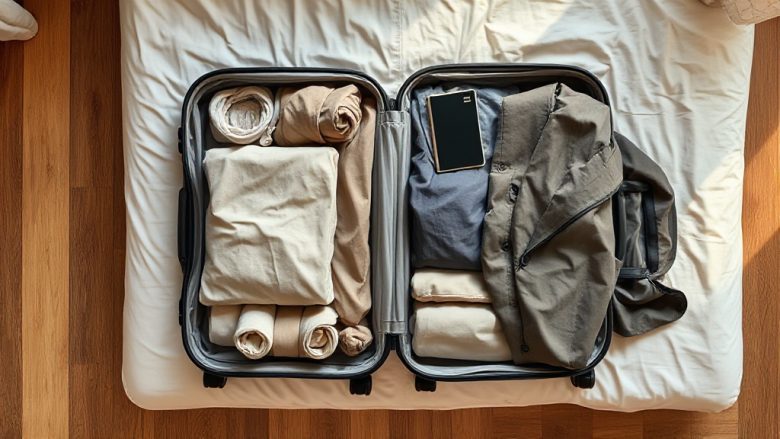
Fabric matters more than quantity. Merino wool and technical blends resist odour and dry overnight. Cotton is comfortable but heavy and slow to dry. For a two-week trip, a couple of merino tees can replace four cotton ones and still smell fresher on day ten. Roll clothes rather than folding them flat — it saves space and reduces creasing. Pack the heaviest items at the bottom of the bag, near the wheels, and keep the lightest layers on top.
Toiletries and Health Essentials
Toiletries are where bags quietly gain three kilos. The answer is decanting. Buy a set of small refillable bottles and transfer your shampoo, conditioner, body wash and moisturiser into 100ml sizes. That’s enough for two weeks if you’re not washing your hair twice a day. Solid bars for shampoo and soap are even better — no liquid limits, no leaks, and they last longer than you’d expect.
Your toiletry pouch should cover the basics: toothbrush and toothpaste, deodorant, a razor, hair ties or a comb, and any skincare you genuinely use. Leave the ‘maybe’ products at home. Most hotels and rentals provide soap and often shampoo, so you can travel lighter than you think.
Health items deserve more attention than they usually get. Pack a small medical kit with painkillers, plasters, anti-diarrhoea tablets, rehydration sachets, and any prescription medication in its original packaging with a copy of the prescription. If you’re going somewhere tropical or remote, add insect repellent, sunscreen, and oral rehydration salts. A basic first-aid approach beats hoping a pharmacy is open on a Sunday.
Don’t forget the unglamorous stuff: a small bottle of hand sanitiser, a few laundry sheets or a travel wash bar, and a compact sewing kit with a safety pin or two. These weigh almost nothing and solve problems that would otherwise cost you an afternoon. If you use contact lenses, bring a spare pair and your solution in a travel size. If you wear glasses, pack the case — aeroplane cabins dry eyes out fast.
Tech and Documents
Tech is personal, but the principle is the same: bring what you’ll use daily, not what you might use once. For most people that’s a phone, a charger, a power bank, and a plug adapter for the region. A universal adapter with USB ports replaces a tangle of separate plugs. If you’re working or photographing seriously, add a laptop or camera — but be honest about whether you’ll actually use it, because every device brings cables, cases and worry.
Cables are the silent space thieves. Bring one charging cable per device and one spare, coiled with a hair tie or cable tie. A small zip pouch for chargers stops them colonising your entire bag. If you’re flying long-haul, a pair of wired earphones or a splitter can save you when the airline’s entertainment system needs a specific jack.
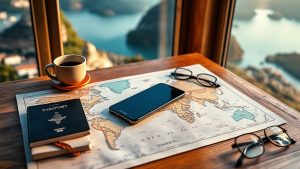
Documents are where preparation pays off. Before you leave, make digital and physical copies of your passport, visa, travel insurance policy, bookings, and emergency contacts. Keep one set in your carry-on and one in the cloud, accessible offline. Carry a couple of passport photos if you’re visiting countries that issue visas on arrival. A small notebook with addresses and confirmation numbers is old-fashioned but works when your phone dies.
Money deserves a mention here too. Carry a mix of local currency and a card that doesn’t charge foreign transaction fees. Tell your bank you’re travelling so your card isn’t frozen mid-trip. Split cash between your wallet, your bag and a hidden pouch — not because you’re paranoid, but because losing everything at once is a genuinely bad day.
Destination-Specific Add-Ons
The core list gets you to the airport. The destination decides what else goes in. Cold climates need thermal base layers, gloves, a hat, and shoes with grip — and remember that layering beats one bulky coat. Hot climates need breathable fabrics, a wide-brimmed hat, high-factor sunscreen, and a light long-sleeved shirt for sun protection and conservative religious sites. Rainy destinations reward a compact umbrella and a dry bag for electronics.
Beach trips add swimwear (two pairs so one can dry), a sarong or quick-dry towel, and reef-safe sunscreen if you’re snorkelling. City breaks reward comfortable broken-in shoes and a crossbody bag that zips. Adventure travel needs a headlamp, a water filter or purification tablets, and blister plasters. Business travel means one smart outfit that doesn’t crease, plus a folder for documents.
Season and culture matter as much as climate. If you’re visiting temples or mosques, pack a scarf or shawl that covers shoulders and knees. If you’re travelling during Ramadan or a festival, check opening hours and dress expectations in advance. If you’re moving between regions, pack for the coldest point and layer down for the warmest. One versatile scarf can be a blanket, a pillow, a sun shield and a modesty cover — it earns its place in any bag.
Pre-Departure Checklist
Two days before you fly, lay everything out on the bed and pack it properly. Then ask three questions. Does each item have at least two uses or match two other items? Have I worn this in the last six months? Would I buy it again if I lost it? Anything that fails gets cut. You’ll be surprised how much survives only because it’s familiar.
Weigh your bag before you leave. Most airlines allow 7–10kg for carry-on, and a bathroom scale works fine — stand on it with the bag, then without. Check your airline’s size limits, because a bag that fits one carrier may not fit another. Put heavy items at the bottom, liquids in a clear pouch at the top for security, and keep your passport, phone, charger and medication in a small personal item you never check.
Finally, run through the practical bits: download offline maps and translation apps, screenshot your bookings, charge every device, and set an out-of-office reply. Empty your wallet of unnecessary cards, freeze unused subscriptions if you’re away long enough, and arrange for someone to water plants or collect post. A two-week trip should feel like an escape, not a logistical crisis.
Pack light enough that you can lift your own bag into an overhead locker and walk a mile with it if you have to. That’s the real test. Everything else is detail. Do it once and you’ll never go back to the 23kg suitcase.